
Has structured data died with the AI revolution?
With the AI revolution, many things are slipping. Certainty that has shaped our thinking and working environments for decades is crumbling before our eyes. One of the reasons why we are in the early stages of this transformation, I think, is that we are not even clear about which tasks and systems will be replaced by AI – and which will not.
LLMs are very good at dealing with unstructured data – such as the widespread knowledge on the Internet and in texts. In this domain, classical computer science has never been good, because it relies on structured data. This is typically saved in, say, SQL tables and columns, with links to other SQL tables in a relational structure, e.g., “Hamburg-Zurich airline” > “on a certain day” > “a certain seat” – and world knowledge is very difficult to save in this way.
Since AI has already fundamentally changed the way we handle and perceive unstructured data, I ask myself: Does this also happen with structured data?
I think: yes, without a doubt. But not in the same way as in the case of unstructured data. In the following, I would like to explain my thoughts on this.
Structured data and systems based on it (webshops, airline reservation systems, ERPs, etc.) will always be available. The big advantage is that these systems can provide answers to fairly simple questions (such as “is seat 9C on flight LX 1051 from Hamburg to Zurich on June 10, 2026 still available?”) that are free of any doubt and scope for interpretation.
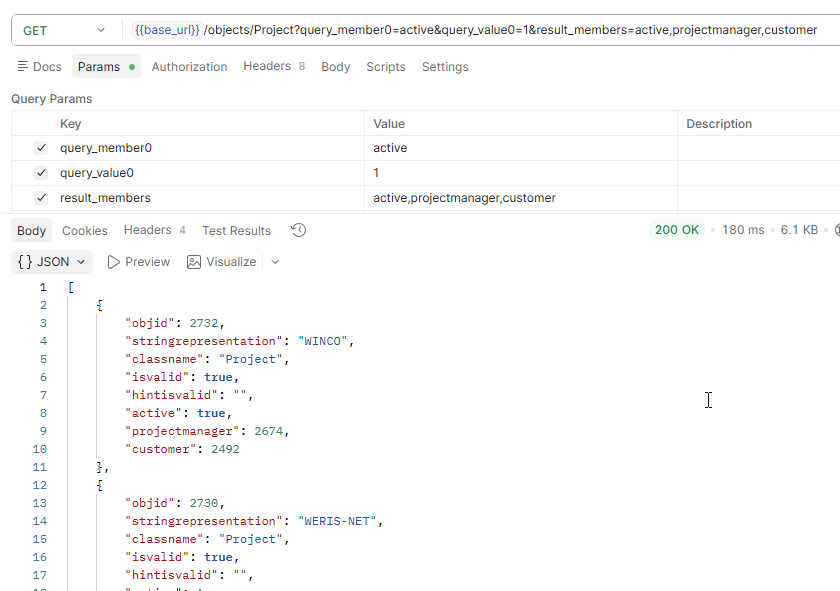
What will change, however, is our access to this data, or to be more precise: AI allows us to interact with the data in a different way compared to traditional user interfaces. The above question about seat 3C can now be sent to SWISS in the same way, and you will be able to buy tickets directly (“Great, book me this seat now, and I’ll need a return flight as well”). This is made possible by an LLM, which understands the question in the first place, and an MCP server (here from SWISS) which can accept requests from the LLM (more precisely: from the AI client used) to answer these questions. Behind this, however, the reservation system will make the necessary changes in the SQL tables, as if the booking had been made via a classic web UI.
So the concept of MCP servers is the AI world’s answer to the question of how AI systems can interact with structured data. And this development is just beginning, and I think in the future, almost every system that holds structured data will have an MCP server.
We at Vertec have been developing such a generic MCP server for some time and will be releasing it in the next few months. There is already a video showing the possibilities.

I see the following use cases in the context of Vertec:
- Automation of one-off (or infrequently performed) transactions where data is taken from place A and transferred to Vertec (or vice versa). Workflow system vendors like Zapier need to be aware of this, I think. For commonly used extensions (in the Vertec context, for example, posting invoices in a financial accounting system), AI systems are likely to be too slow and too expensive for the foreseeable future, with results that are not 100% reproducible.
- Smaller day-to-day works and evaluations (“When was the last time I worked on the TRASTA project?”).
- Reports that you do once (or rarely) and for which there is no ready-made evaluation in Vertec itself: “Please make me a list of my team members with the planned vacations in the coming months”. CFOs will probably want to access ready-made lists and evaluations in Vertec for their standardized controlling in the foreseeable future, but they will also like to use an AI chat for ad-hoc evaluations.
- Multilingual access to Vertec data. The LLM can translate content on-the-fly and thus provide e.g. German reports in activities to English-speaking users.
So to the introductory question, “Does structured data die with the AI revolution?” my answer is: No, structured data remains the foundation of transactional systems, but access to this data is fundamentally changing with the AI revolution.


The idea behind the Vertec MCP Server


The review package for future-proof Vertec installations


Environmental management at Vertec


How to Use AI Features in Vertec with Full Sovereignty

GwG Revision 2026: What Law Firms and Fiduciaries Need to Know Now

Invoice, discounts and warranty at engineers


Give your Vertec the right flavor