The Vertec MCP server has outperformed the RAG system
About a year ago at the 2025 User Conference, I announced our new module “AI Know-how Management” and also presented a prototype. The basis of the new module was a RAG system (Retrieval Augmented Generation) from Squirro.
The idea was to make Vertec texts (e.g. activities, documents, emails) searchable and “chatable” using Squirro’s RAG index. And thus to make know-how hidden somewhere in Vertec’s data visible (“who would I have to ask internally about GTC law in the Netherlands?”). Because of the high infrastructure costs and the licensing of Squirro’s technology, this new module was intended as Vertec’s 10th module, with a minimum number of 20 users, i.e. an annual amount of CHF/EUR/GBP > 5000.
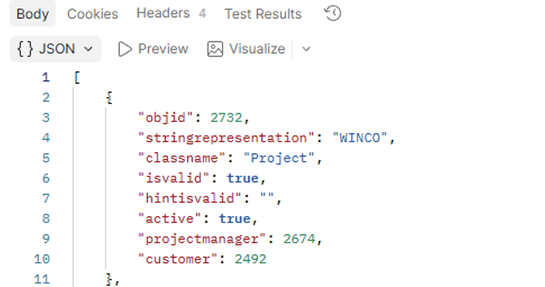
At the same time, we started the development of the Vertec MCP Server, the current AI App. Here the approach is quite different: We provide the AI client and the LLM with direct access to the Vertec objects via the Vertec model. The questions are not answered via an index, but are asked live in the productive Vertec system. I explained the idea behind the Vertec MCP server in detail in a blog article. Thus, the MCP allows access to the structured data in Vertec and can answer questions such as “which unpaid invoices are there in the TRASTA project?”.
To use the MCP, you need an AI client like Claude or Chatgpt, nothing else. Also on our site, the MCP Server is simply built into the Vertec Cloud Server and generates no significant additional infrastructure costs. The Vertec MCP Server is included in every Vertec license without additional license costs.
Our tests have shown where the Vertec MCP Server excels: structured data. It answers questions such as "Which unpaid invoices are there on the TRASTA project?" live and accurately. When it comes to searching large volumes of text such as activities, documents and emails, however, direct access reaches its limits.
The LLM has to work through the data itself with every query. This requires many times more tokens, and therefore costs, and all content is passed on to the provider of the language model. A RAG system such as Squirro's indexes the data once and passes only the relevant excerpts on to the LLM. The data remains in a controlled environment.
So the approach works, but it does not have to come from us. Squirro can be connected directly to Vertec and can incorporate additional sources, such as SharePoint, which we already included in the indexing during the pilot phase. This means there is no need for a separate Vertec module with additional infrastructure and licensing costs. We have therefore decided to conclude the pilot phase and will not continue “AI Know-how Management” as a standalone module.
Our recommendation: for questions about structured Vertec data, the AI App with the Vertec MCP Server is all you need. If you want to make know-how discoverable across larger text collections and multiple systems while keeping costs and data sovereignty under control, the best option is to launch a project directly with Squirro.


The idea behind the Vertec MCP Server


The review package for future-proof Vertec installations


Environmental management at Vertec


How to Use AI Features in Vertec with Full Sovereignty

GwG Revision 2026: What Law Firms and Fiduciaries Need to Know Now

Invoice, discounts and warranty at engineers


Give your Vertec the right flavor