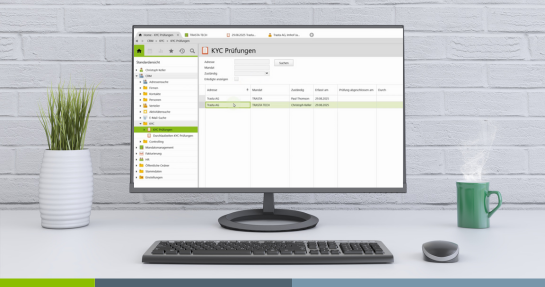
Modern mandate management: a clear overview for higher productivity in your law firm
Many trust and tax firms work at a very high level of professionalism. The teams are committed, the clients are well looked after, and the processes have become established over the years. Yet, in many firms this sense of constant tension prevails: deadlines, queries, deputies, and end-of-year periods regularly cause unrest and, ultimately, stress. Not because employees are poorly organized, but because the structure behind the work is missing.
The risk: This could significantly low down the law firm’s growth in the medium term.
Claudia in reaction mode
08:17 a.m., Monday morning. The phone rings. A client again asks for the status of his VAT invoice. Unfortunately, the employee in charge is off sick. Claudia, her deputy, searches: in the email inbox, in the DMS, in the task list. Several folders, several systems – everything is there, but no clear and quick answer. Claudia is annoyed. The day is already starting stressful.
Claudia Meier is the administrative lead in a medium-sized law firm in Switzerland. She is responsible for around 180 clients and coordinates a team of several employees, some of whom work part-time. The duties are typical for a fiduciary office: accounting, VAT settlements, annual financial statements, payroll processing and numerous recurring deadlines.
How do you get the whole picture of your mandate management?
Claudia is experienced, committed and has a high standard of quality and client satisfaction. Her employees work conscientiously and the clients are generally satisfied. Nevertheless, she has recently noticed that her daily work has changed:
More and more often, she only reacts to situations, rather than pro-actively steering them. Her day is dominated by hectic calls from clients, short-term queries from the team or open points just before the deadline.
What particularly troubles her are the same questions that always go through her head:
- Where do we stand on case X?
- Is VAT really complete for the third quarter?
- Who actually is working on this task?
- And why does she only find out through a client's call that something is still open?
The core problem is obvious:
It is not a matter of commitment, but lack of a common understanding. And a lack of a daily overview of all tasks and cases.
When transparency becomes person-dependent: the hidden risks of a lack of standards
A closer look behind the scenes in the team shows that everyone works carefully, but in their own way. The folder structures differ, personal checklists add to the official filing. Deadlines are also kept in individual Excel lists. The progress of a case is rarely visible centrally, but often only exists in the head or in personal documents of the person in charge.
As long as the team is reasonably small and everyone communicates well with one another, this system may work. Otherwise, chaos is quickly inevitable. Especially with a growing number of mandates and different working hours, the risk increases:
- Deputies become uncertain because no one knows exactly how far a case actually is
- Even worse: tasks may be overlooked or work may be done twice
Every investigation and double-checking costs valuable time.
In most cases, several employees are involved. With the high number of mandates and cases in mind, this results in a significant loss of efficiency. This is fatal for productivity and margin. These permanent interruptions not only reduce productivity, but also the satisfaction of the team.
Claudia, too, quickly realizes that the dilemma is that transparency depends on individuals and is not supported by a common structure. The larger the firm, the more vulnerable the system becomes.
This is exactly where modern mandate management comes into play.
Change of perspective in mandate management: structure instead of individuality
The idea that eventually made the difference came from an external project manager, a friend of Claudia's.
Until now, the motto in the law firm was: How can we work individually even better? So, everyone optimized their own method, their own checklist, their own folder structure.
But now the crucial question is a different one: How do we create a consistent, recurring structure for all cases with daily updated data that everyone has access to?
The law firm decides to introduce a modern case management system, which is part of a law firm management system.
- at the center is a root folder, which is structured in the same way for each case and service field
- standardized objects show progress status of each case and the deadlines
- annually recurring tasks are mapped in a structured manner
- the same logic applies everywhere
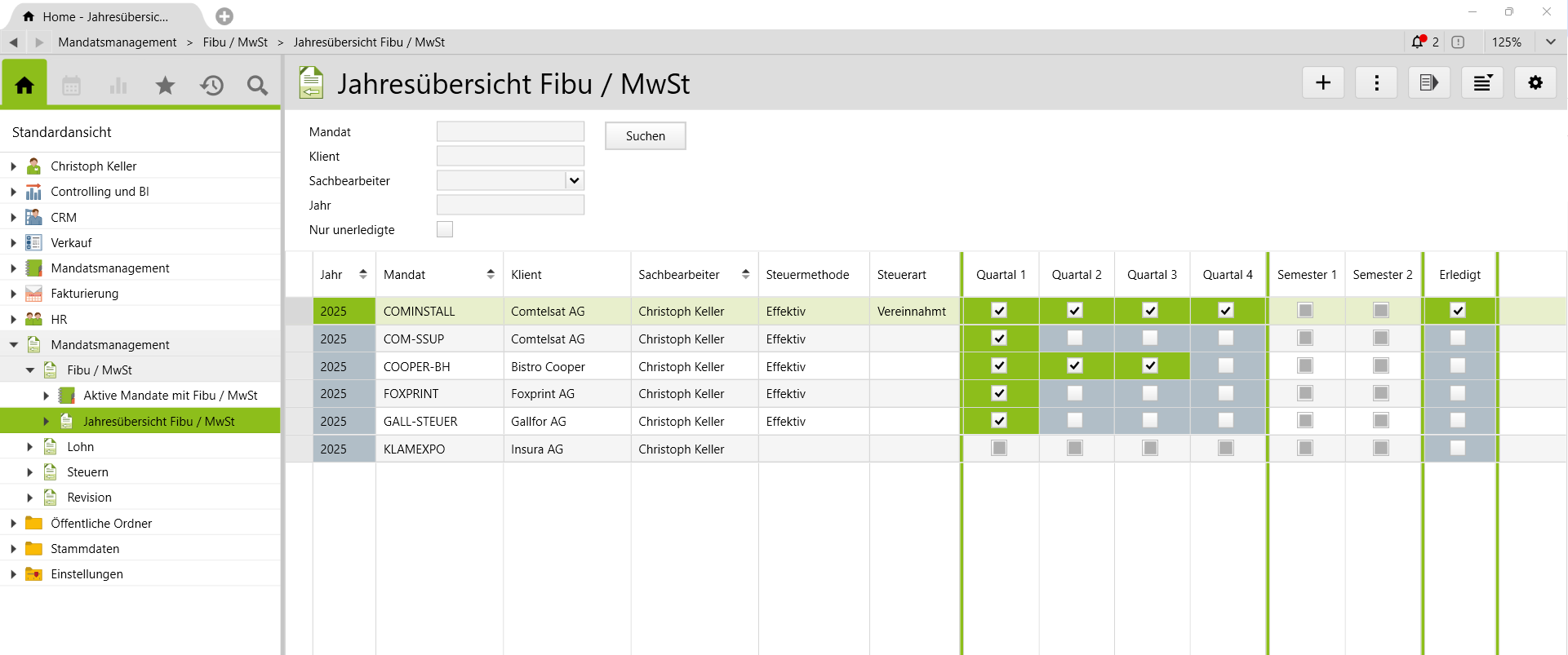
Individual special solutions or one-off adjustments are a thing of the past. They are replaced by a standardized, updateable foundation.
More focus and productivity with a clear overview
A few months after the implementation of the new mandate management system, the progress becomes obvious: Claudia can now see the status of each case and mandates at a glance. The most important tasks and deadlines are transparent, regardless of who is working on them.
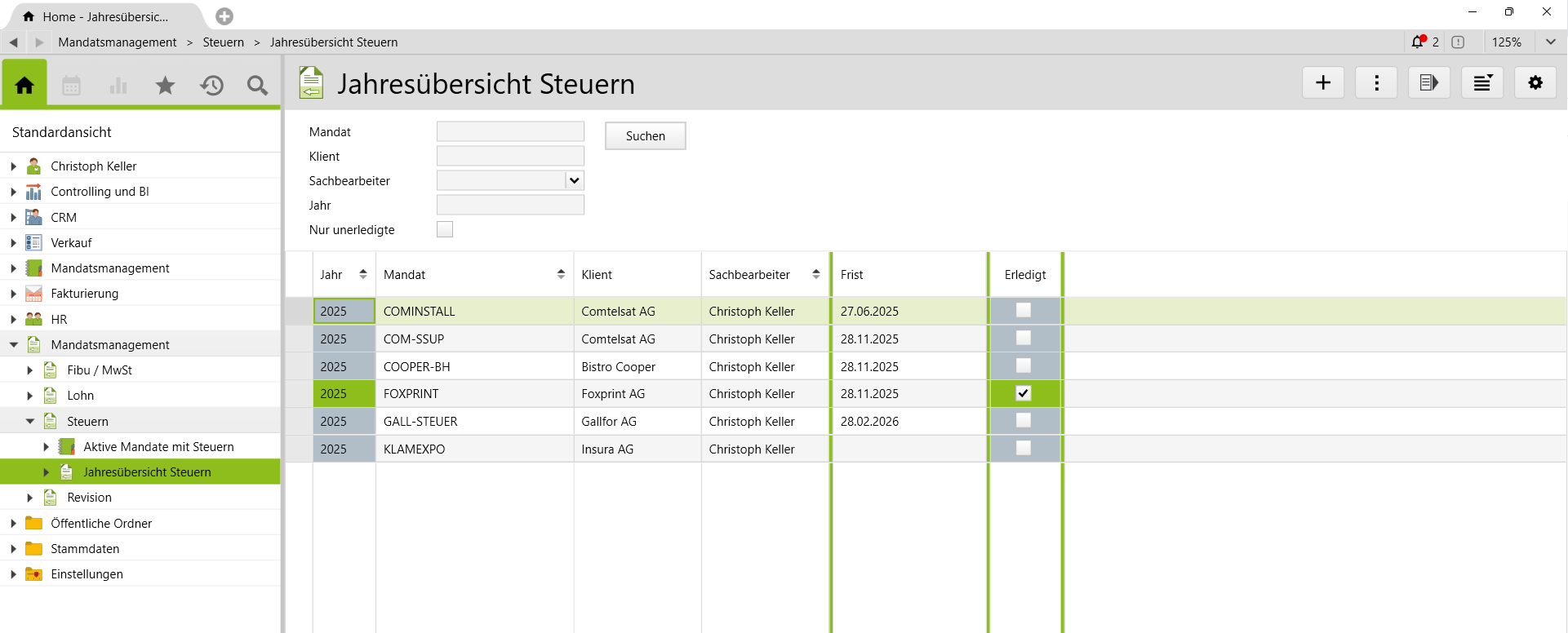
Deputies can now proceed without lengthy handovers or uncertainties. If a client calls, Claudia can provide information immediately, without having to consult different people or lists. Employees can focus more on their core duties – rather than on searching for information. What used to be a hectic reaction before, has become a controlled act. Recurring tasks run in a structured manner throughout the year, leaving more time for essential work.
Everyday work feels different now: calmer, clearer, and more predictable. It is a new understanding of security created by genuine transparency and a uniform process architecture. Processes repeat themselves according to the same logic, regardless of who executes them.
Mandate management with a future at Mattig Suter
The Treuhand- und Revisionsgesellschaft Mattig-Suter und Partner has been relying on Vertec’s software for fiduciaries for many years.


Conclusion
Back then, on this Monday morning, the working day felt longer than it was. Today, Claudia knows: The problem was never the commitment of her team. It was the lack of a common structure. It is precisely this new structure that makes the difference between only working in an "reaction mode" and steering a law firm predictably and future-proof.
Modern law firms necessarily do not grow faster just because they work more. They are better organized. The result is economically successful working.


30 years as a software entrepreneur


Efficient case management for your law firm – digital files, deadlines & DMS benefits

The ideal solution for Law Firms: Vertec and iManage in perfect harmony

New in Vertec: Sealing accounting documents
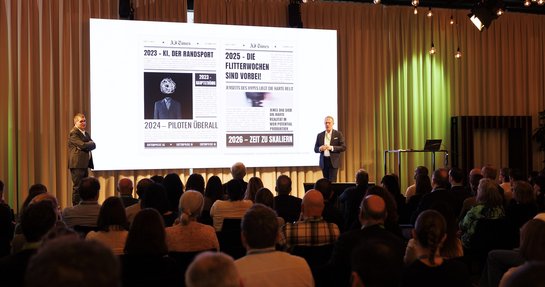

Vertec and AI – Finding Opportunities in the Right Areas


Online Event Trust Services: From Hanging Files to Business Software: Digitization Made Easy
The 2025 User Conference – A Day of Insights, Inspiration and Excitement