Environmental management at Vertec
Environmental management creates clarity about our impact
a software solution has little visible environmental impact at first glance. No production halls, no supply chains with large flows of goods, no physical products. But even a software company leaves an environmental footprint – for example, through energy consumption, mobility, or waste.
The first step in the implementation of environmental management at Vertec was to create transparent: Where do the environmental impacts actually occur? Which areas can we influence? And which measures have a real impact?
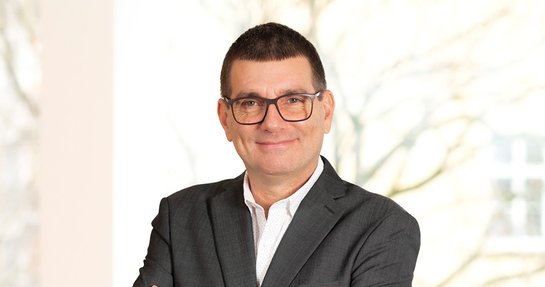
Vertec is certified according to ISO 14001. For Ute Heimann, the focus is not on the certificate, but on the question of what can be deduced from it. What environmental management at Vertec actually means, what insights we have gained from it and what measures have resulted from it, she explains in an interview. Ute is Environmental Management Officer and Head of Product Configuration at Vertec.
Ute, what excites you about your Role as an environmental management officer?
Ute Heimann: I am thrilled that we see environmental management as a common task in the company. I think it is important that we deal with the effects of our actions and not simply assume that someone else is applying responsibility for our environment.
What I find particularly exciting is the analysis of our environmental impacts and the opportunity to initiate concrete improvements. We are consciously taking a factual and data-based rate. We want to understand where our real environmental impacts are and make improvements there, rather than simply implementing measures that look good but have little effect.
What measures have we already been able to implement?
Ute Heimann: First, we collected a lot of data to understand where our biggest levers lie. Then we analysed which areas we could actually influence.
This led to a number of measures. For example, we introduced reusable containers that employees can use for their lunch. We also offset all air travel using Sustainable Aviation Fuel (SAF).
What impact have these measures had?
Ute Heimann: Our amount of waste has decreased: We have been able to reduce the quantity of waste bags we use from 190 to 159 per year. This corresponds to around 16 per cent less waste. A great success and a symbol that even small changes in everyday life have an impact.
When it comes to air travel, we assume that SAF offsetting will reduce emissions by around 80 percent. At the same time, I have worked intensively with different offsetting approaches. It became clear that the effect is different depending on the rate.
For example, it would also be possible to purchase CO2 certificates. However, the effect is more indirect through long-term market effects. It is not the case that a certificate that is withdrawn from the market directly leads to fewer emissions. I found it particularly exciting to understand these interrelationships better.
Mobility has the greatest impact
One insight stands out for Ute: The greatest environmental impacts do not occur where many would expect them to occur.
For her analyses, she converted different areas into CO2 equivalents – from electricity consumption to waste disposal to transport routes. The result is clear: transport causes by far the greatest environmental impact. “Even with SAF compensation, air travel is still one of our biggest emitters,” says Ute. “I find that really astonishing.”
More than a certificate
Environmental management at Vertec creates one thing above all: clarity. It shows where the greatest impact is, which measures are useful and where challenges remain.
Not every improvement is possible immediately, but the basis for conscious decisions is created.


The idea behind the Vertec MCP Server


The review package for future-proof Vertec installations

How to Use AI Features in Vertec with Full Sovereignty
Has structured data died with the AI revolution?

Automated AML check in Vertec
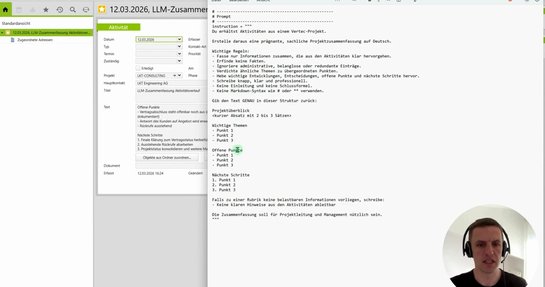
AI in Vertec: the new LLM Client in Python 3
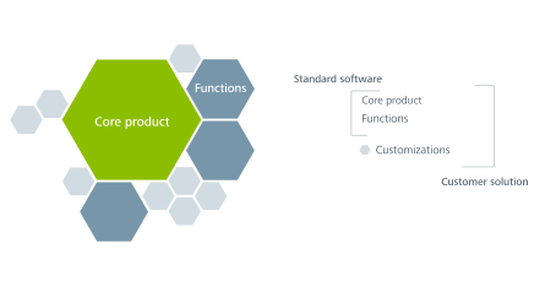
Update capability and adaptability in Vertec: a technical area of tension